

Would you pay 4.000€ for a painting made by AI? Nil Ojeda’s auction
Share news
Listen

Act One – The promise of art made by AI
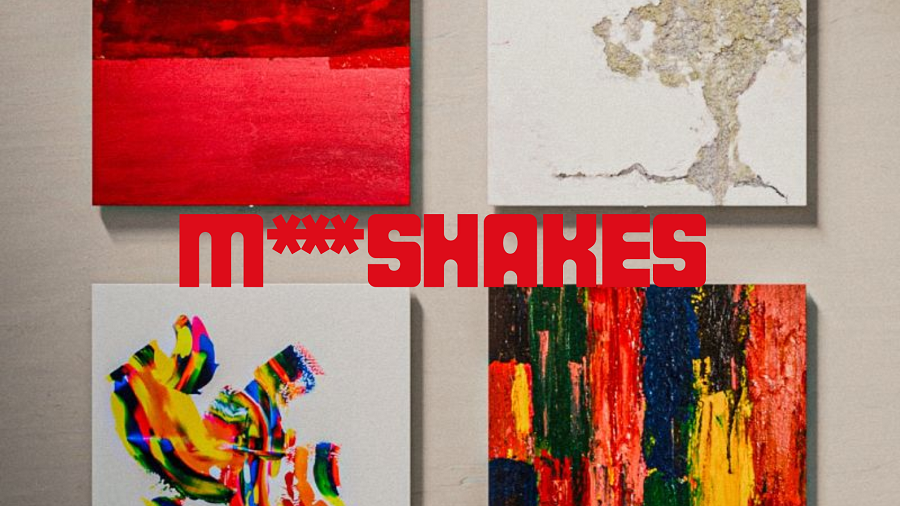
The starting point was simple and very calculated. Nil announced a new drop in his brand Milfshakes, presented as Art made by AI. To give the project credibility, he enlisted the collaboration of Eva Hache, who starred in a video shot in a real gallery.
In that first content, there was no mention of identity games or hidden clues. Uncomfortable questions were raised. What is art when the work has no soul. If emotion is something exclusively human. If an algorithm can generate something that deserves to be hung on a wall.
The staging was serious and sought an immediate reaction. It placed the project in a legitimate cultural framework and prepared the audience to take sides.
Act two – The auction and the fire in networks
From Thursday, November 13 to Sunday, November 16, the Milfshakes website hosted a blind auction of four physical paintings. Each person could bid without knowing what others were bidding.
As the bids went up, a firestorm erupted on networks. X and TikTok were filled with messages accusing Nil of disparaging art and taking advantage of the AI craze to cash in. Many assumed the pieces were simply computer-generated images transferred to canvas.
Nil and his team opted for silence. No clarification, no defense, no response. Silence acted as fuel. The more angry they got, the further the story went.
Auction results
OVERLOAD – 2.100 €
AT ONCE – 2.000 €
WHAT REMAINS – 1.550 €
Act Three – The Revelation and the Four Ia
When the auction ended, Nil dropped the final bombshell. He published a second video, making of style, where Eva Hache appeared again to explain what had really happened behind the drop.
Eva began by clarifying a surprising fact that, until that moment, no one had related to the campaign. In Spain there are 218 women officially registered with the name Ia. That detail was the clue that supported the whole concept. AI was not only artificial intelligence. It was also a real name.
The video then showed the four artists who had participated in the project. Their IDs and full names were visible. Ia Barba, Ia Dolçet, Ia García and Ia Ruiz.
The closing of the video left the play perfectly defined. We said it was made by AI, and we didn’t lie.
The revelation did not reveal a technical trick, but a linguistic play. The project did not seek to deceive about the method of creation, but to show to what extent we interpret the word AI from prejudices and expectations loaded with public debate.
The impact of the plot twist
The revelation not only closed the story. It transformed it.
First it defused the crisis. The anger that dominated the networks turned into surprise and applause. Many users who had criticized the drop as a mockery of art understood that, in reality, they were facing an exercise in reflection on
Then
It also
The clues that were there
Despite the debate, the campaign never lied from a legal standpoint. The auction terms explained that AI was a conceptual artistic identity, not a technical indication of the creative process.
Most overlooked that detail. The experiment revealed how our attention works in the digital age. We give an opinion before we read. We react before we analyze.
An experiment that redefines how we count, perceive and value creativity
Art made by AI was not a project about technology, but about how we look at technology. Nil used a word loaded with expectations to expose our biases and to demonstrate that good storytelling can transform a drop into a shared cultural moment.
For the event industry, it leaves a clear lesson. The experience is not only what happens in the physical space, but also everything that is generated around it. The previous conversation, the conflict, the final twist, the collective reading. When story, concept and execution are aligned, the impact is multiplied.