

Ecoposturing is evolving globally, says Greenwashing 2025 Yearbook
Share news
Listen

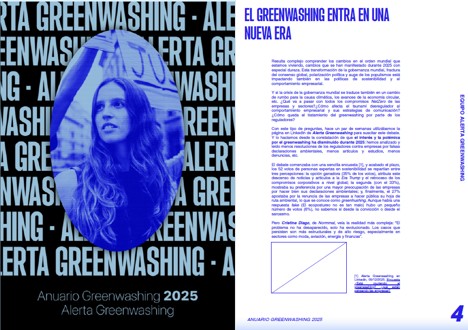
The Alerta Greenwashing collective presents today the Greenwashing 2025 Yearbook, a new edition that analyzes how corporate greenwashing is evolving globally, also in Spain, in a year marked by drastic transformations in global governance, corporate behavior and business communication. This is its third edition, which gives voice to experts in communication, marketing and advertising, sustainability consulting, consumer rights and eco-social activism. Through 14 authors and infographic pieces, the report brings together case studies, trends, discourses and risks associated with greenwashing.
Interesting topics are discussed, such as the misuse of the word “regenerative”, the dilemma of carbon credits, the risks of greenwashing, an analysis of the new law on sustainable consumption or, for example, the absence of an agreed certification in the cosmetics sector. Other reflections focus on corporate communication, with relevant topics such as how B Corp companies face greenwashing, the distrust of consumers towards brands that practice ecopostureo, the impact of AI in environmental communication (baptized as bluewashing) and the new challenges of corporate communication in environmental matters, among other aspects brought down to earth within the green discourse.
On the other hand, in an international context that alters the climate agenda with the increase in geopolitical tensions, the rise of populism and the fracture of the international climate consensus, the impact on corporate sustainability policies, the fulfillment of their decarbonization commitments (Net Zero objectives) and their communication policies has been relevant, such as the regulatory setback in the EU in terms of corporate reporting or due diligence and corporate sustainability.
You may also have noticed how the greenwashing debate has lost momentum over the course of 2025, not because it has disappeared, but because it has mutated. Greenwashing is now shifting from product to corporate narratives, ESG investments, institutional marketing and sustainable transition communication. However, the action of regulatory bodies in the face of false environmental claims (SHEIN, Adidas, Nike, TotalEnergies, etc.) in sectors such as fashion, aviation, energy and finance persists, with notorious fines in our European neighbors.
The conclusions of this study are supported by data: first, a Bain & Company study, based on 35,000 CEO statements, shows a significant drop in references to sustainability and a growing rejection of the term ESG, now perceived as politicized. Secondly, a Sustainable Views survey of 90 sustainability teams confirms that two-thirds of companies have changed the way they communicate: they are abandoning “ESG” and adopting concepts such as risk, resilience or value; and finally, economic journalism highlights a shift towards new global priorities: energy, security and geopolitics as the “new ESG”.
You can download the full report for free at https://alertagreenwashing.org/