
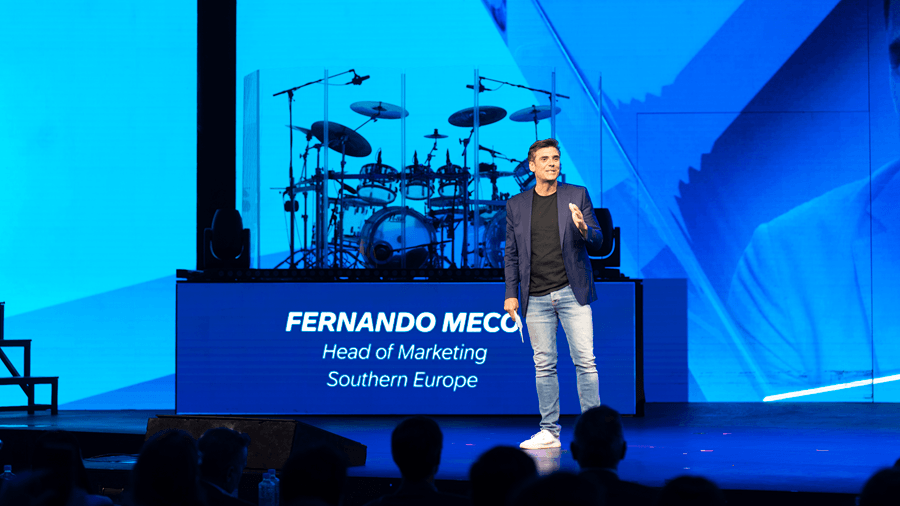
Interview with Fernando Meco, Marketing Director, SAP, Southern Europe
Share news
Listen

Let’s go through the components of your marketing as an introduction: there is advertising, there is sponsoring (F1), there are events, there is digital marketing, especially to capture leads and to gain influence. Is that right?
Yes, but in recent years we have become very verticalized and a lot of this work has been taken to global or EMEA-centric organizations. For example, sponsorships are not taken to the local level (local can propose but are validated as part of the global strategy). We have very powerful sponsorships that we tend to reuse, such as Formula 1 (Mercedes-AMG PETRONAS F1 Team) or Cirque du Soleil, which is a major client of ours and where we have a significant presence, or soccer teams in Germany or even the NFL. And then they are activated at the local level. My role is to integrate those elements and bring them to the sales teams, and to the customers.
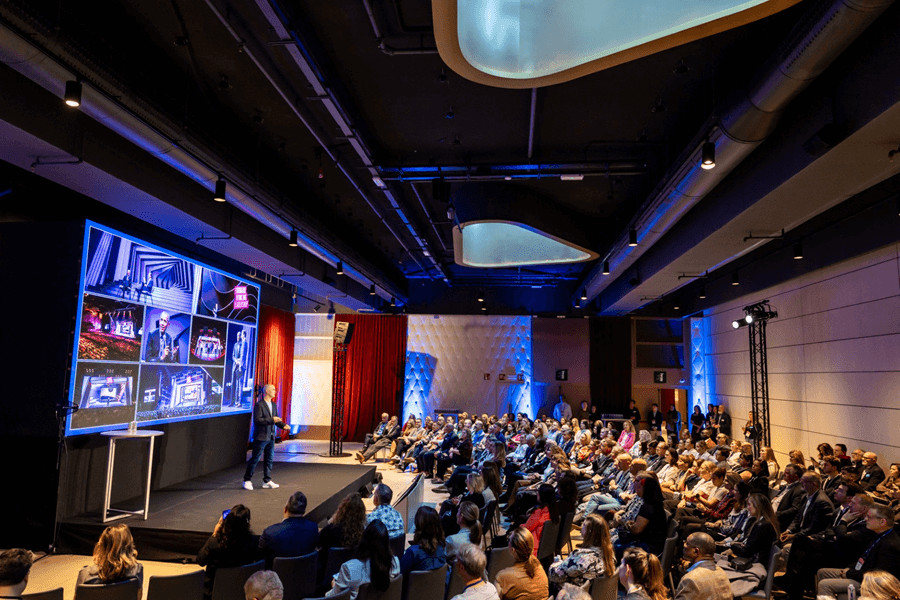
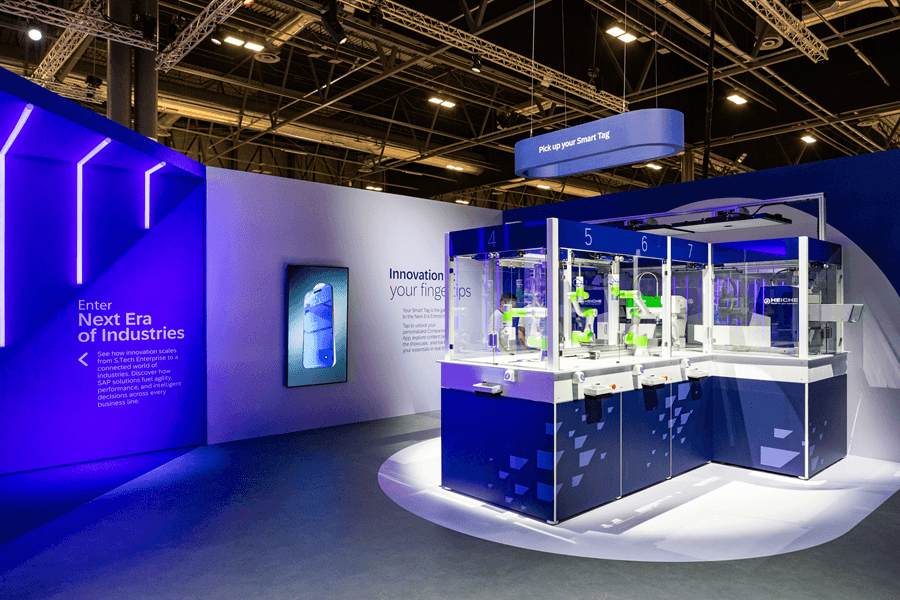
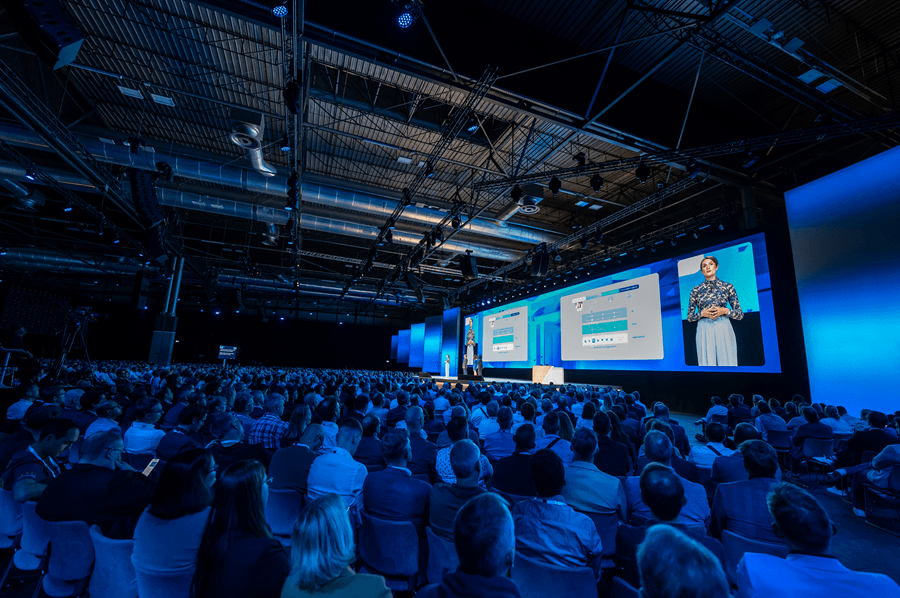
The company’s Global Events team manages tier one events, such as SAP Sapphire EMEA, SAP TechEd, and Sap Connect. Those happen globally in Orlando usually, and in EMEA. We take advantage of that: since they often happen in Madrid or Barcelona, we take care of the largest audience.
“We have verticalized… Sponsorships are defined at the international level, and activated at the local level.”
Do more and more large companies seem to consider that global sponsorships allow them to be more coherent and optimized? Is marketing becoming more and more global?
I think awareness, especially in sponsorship, is a perfect tactic to create new market in B2B. This Christmas we did ads in Piccadilly Circus, ads in New York on New Year’s Eve. Those ads in an end-consumer environment rather than B2B are looking for awareness impact, which allows you to create new market.
The B2B purchasing decision is much more complex than it used to be. It used to be that the IT guy made all the technology decisions. Now many profiles have an influence. That’s why you need to raise awareness, because you can start knocking on doors or being invited to companies where you were not invited before, due to lack of knowledge. Awareness plays a very important role in creating the market.
You create a new market, and as you go down the funnel, you localize. When I bring the strategy to Spain, to Turkey, to Portugal, I have to be clear about how to do business here. It is still a “high touch sales” business, a consulting business. Then, I have to take into account my readiness to orient that go-to-market in one country or another and take that product to some point where it can be. Hybridization is total. You can’t just be online or offline, global or local anymore. You need to build a series of tactics that are appropriate to the customer journey. It is important not to invest in a conversation that is not yet ready. In other words, try to understand this person, where they are and apply certain tactics to activate them.
“It used to be that the IT overlord made all the technology decisions; now many profiles have an influence.”
“Hybridization is total; you can no longer be neither just online nor just offline, neither just global, nor just local.”
Marketing can be extremely simplified by saying: First you have awareness, then the fact of getting in contact, capturing leads, which can be online, and then, deepening the relationship, for example, in an event or activation. Is this simplification correct and awareness is becoming more and more global and activation is becoming more and more local?
In principle, yes, that’s the simplification. And the more global, the more I can make noise. And it’s also a logical investment point. When you negotiate with media houses globally, you get into better pricing. It’s important to understand that B2B awareness tactics are changing. Before it seemed to be just at the AVE station or the airport. Now you start to see new awareness tactics, which can be in business schools, that allow you to reach a function, the financier, the controller, and you start to get there in a fine rain in which you are not trying to sell. The best way to raise awareness is to teach and educate. And that awareness is also a word of mouth in the function, in the community.
“We create awareness in new targets, in a fine rain in which you’re not looking to sell.”
Marketing has become more complicated, and I now understand the need to segment by industry and access many functions that are more business-oriented than technology-oriented.
Increasingly, we are looking to create communities, key to generating aspirational content, to be useful to the customer. We have done initiatives like SAP CFO Get-Together, a program for CFOs. You have to convince the validity of a tactic in which there are not going to be sales people; there is going to be the Global CFO of SAP and a group of CFOs are going to get together around a theme. You have to get three of those CFOs to become the content leaders, they’re going to propose and you’re just going to go along with it. And you have to get the general manager to understand that out of a meeting of 30, 35, if only eight or nine attend, it’s not a bad thing. It’s an opportunity to foster a much stronger community, because they have time to talk to each other. They speak the same language… And it’s been a success. It’s an example of boutique, of personalization, which has tremendous value, because in the end relationships are created.
This is where we are looking for more personalization, within “I am going to teach you something, I am going to educate you on this product; I have something to tell you that is related to a product”. But the most important thing is to bring customer cases told by them. We are still talking too much about brands; we need to bring customers to talk much more.
“We’re still talking brands too much; you have to bring customers in to talk.”
Is it more and more about utility, business, rather than technology?
Yes, it has to be about the business process. If I organize an event for HR managers, on recruiting, payroll, performance management, I try to impact the HR manager with his pain, solve it, and let him see what it brings to the business process. Even mixing with other functions involved, for example finance. We are talking about not only unique decision makers for each business process, but also committees of decision makers and having them identified in our CRM.
You have industries on one side and functions on the other, this matrix view ends up being complex to manage, doesn’t it?
SAP has a strategy based on audiences, on profiles. Each profile has a headache. Each one can relate more or less to the others. There may be supply chain issues, but the supply chain guy has to relate to the CFO, because his decisions are going to impact the bottom line. We didn’t have that clear vision before, but business processes are becoming more and more unified. Where we are going is to be aware that this is happening, that there are audiences that are no longer silos, that are becoming more and more unified and you need to have a layer that unifies all of that. On top of that, we can make it more complicated.
In short, the number of reading angles is enormous.
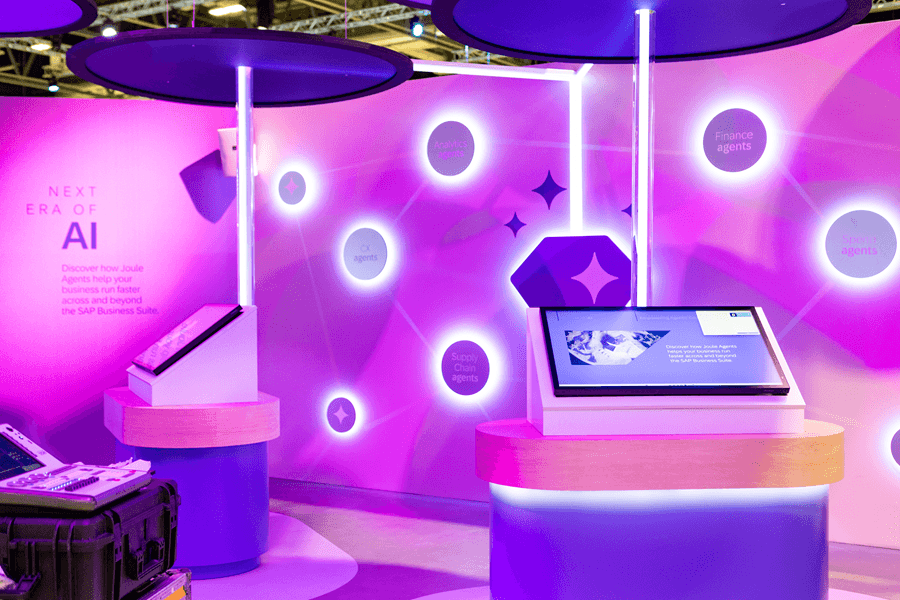
This is where I hope the technology associated with AI at events and with our customer data can help…. First, make the customer experience related to that moment very personalized, and make the customer think “I’m a human group manager, I’m interested in this kind of thing.” This personalization, this individualized communication and recommendation has its challenges, with some GDPR-type legal limits, but it’s growing.
You have lived through the dictatorship of the lead. Is the problem with the lead that the person is seen as a profit and loss account? Are we moving towards marketing that is a little more patient?
It is very clear to me. In B2B, in technology that is complicated to sell, with long sales cycles, marketing has to be a light for nurture, taking care of who that person is, what I’m giving them. That care for details that brings excellence in any experience. And that experience is going to have moments inside, it’s going to have events, it’s going to have meetings, it can have content downloads, whatever. It’s important for marketing to take on that role of care, advocate for the customer.
And in SAP we measure everything. I have KPIs that are closer and closer to sales. That is, my targets each month are more of the pipeline that you have generated and that turns into revenue. But what is the attribution model? It may have been me, it may have been an event, it may have been the commercial. We have to look at other metrics, such as pipeline influenced with communication moments.
“In technology that is complicated to sell, with long sales cycles, marketing has to be a light for nurture.”
There’s AI, there’s the explosion of content generation, there’s a saturated digital world… Will events become increasingly relevant because of this noise? And is human trust growing in importance despite the fact that we can measure more and more to know which product to buy?
It is not a partisan struggle, it is not one thing or the other, but the event will continue to be important, in the sense that there is an irreplaceable human connection. What is also very important is to understand what the event is for and to make a very concrete segmentation. You have to have in the marketing plan, you have to have events where you don’t want to sell anything and where you are going to have a return in two years.
You have to have events for practitioners. You have to have community events even touching on more sensitive issues of professional development of those people. Your clients, the more they grow, the better for you. Therefore, developing them professionally, getting involved in their development, is useful. If you define the event with very specific objectives, it will always work.
“You have to have events where you don’t want to sell and where you’re going to have a return in two years.”
Bearing in mind that at the same time there is a fight for people’s time…
If it’s not useful to the person, too bad. That’s where B2B and B2C are coming together. As consumers, if it’s not useful you don’t go. It’s going to require a very strategic conversation when deciding what events to do.
You have the mega event, the small events, the road shows, the pure hospitality or sponsorship events. Does the mix seem mature enough for you today?
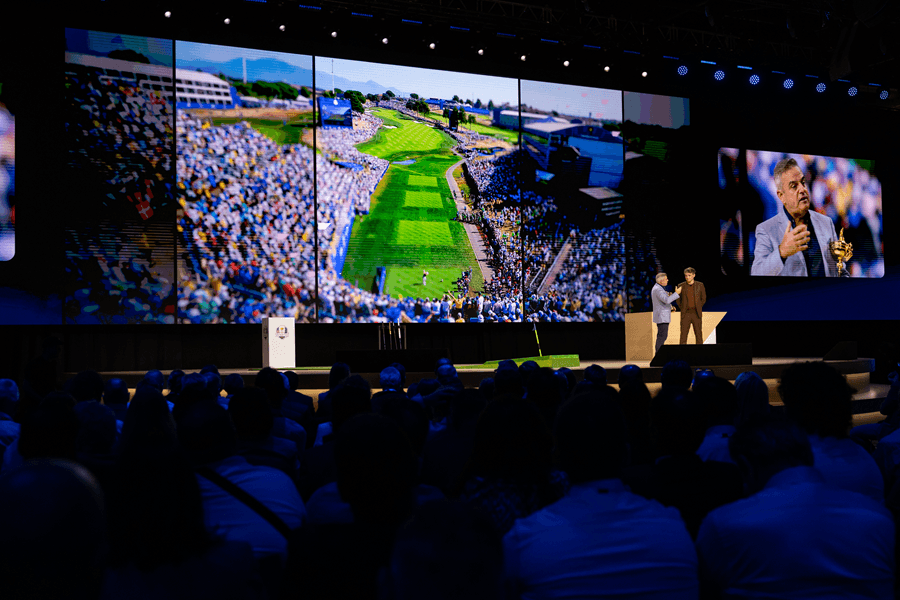
I think that, for example, our SAP Sapphire is a great event. And the last edition in Madrid has been spectacular. For me it’s a very important moment to land strategy. It’s the high-level moment, why SAP. But it’s not the time to play. It’s inspirational, “look where I’m going.” But then you have to land it and that landing goes local. Sapphire says ‘why SAP’, then a more local event goes to the ‘how’, in local, with partners.
To reduce this, with limited marketing resources, we give sales a self-service: “take the brand, take the agency”. It is a way to reach new segments, more SMEs. We have products and expertise to enter into business processes, even for upper mid-size companies.
Have you defined what the SAP event experience is, the ‘style book’?
Yes, we have defined it. We have a tone in communication and a tone in how each of these moments has to be. An SAP experience has to be an experience that is very close to the community, in the sense that in a community you feel free to ask questions, to criticize, and you feel supported to develop. No matter what business process you are involved in. You have to go to an SAP event with the idea of going to listen, but also to talk. It can’t be one-way; it’s a community. The European character, which is perhaps less aggressive, less competitive, more human, more protective, is part of what SAP is.
“An SAP experience is with a community where you feel free to ask questions, to criticize and you feel collected to develop.”