

Women’s sports are now big business: The Change Congress reflects brands’ shift in strategy
Share news
Listen

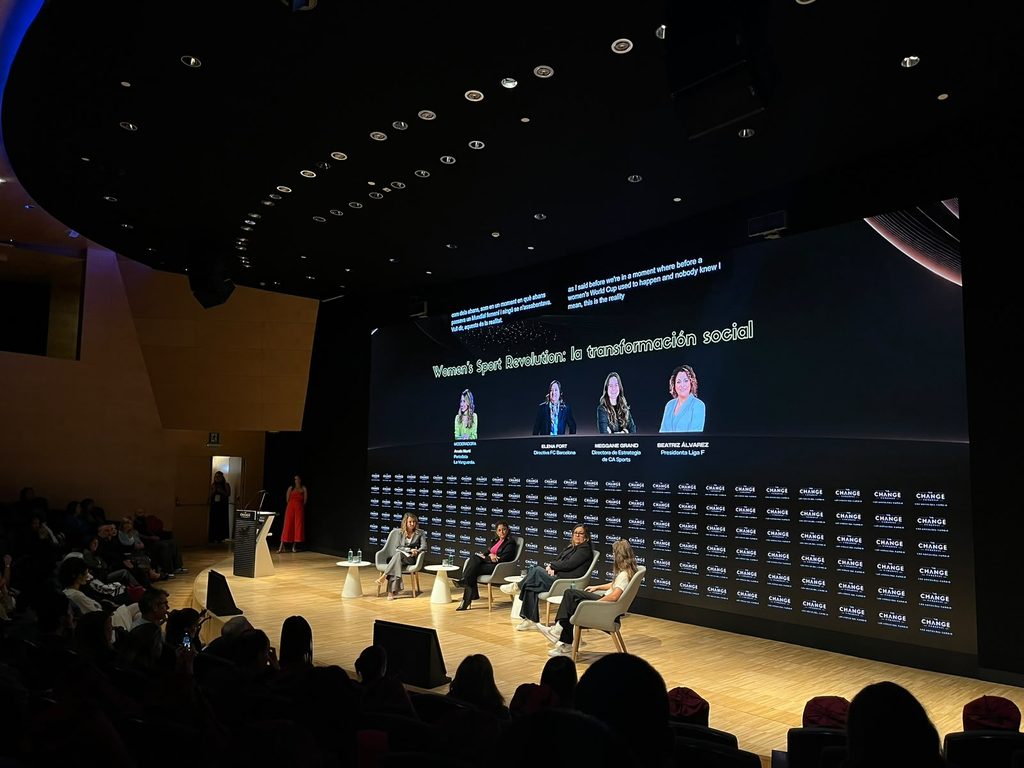
The timing couldn’t have been better. Just one day earlier, the Barça women’s team had defeated Real Madrid 7-0 at Spotify Camp Nou in front of 40,533 spectators—a record attendance for a Liga F match. The match inevitably came up during the Women’s Sport Revolution panel discussion, which featured Elena Fort, FC Barcelona’s institutional vice president; Beatriz Álvarez, president of Liga F; and Meggane Grand, chief strategy officer at CA Sports. Fort explained that the match had generated approximately 1.3 million euros in ticket sales, a figure that also set a record for the competition.
“There’s an audience, there’s consumption, and there’s business.”
And perhaps that statistic explains the current situation better than many reports. More than 40,000 people went to the stadium and paid to watch women’s soccer. There’s an audience, there’s spending, and, therefore, there’s an increasingly attractive market for brands. Deloitte also estimates that elite women’s sports will generate at least $3 billion globally by 2026. More than the figure itself, what matters is the trend: it represents a 340% increase compared to 2022.
What’s interesting is how this growth is changing the conversation. Sponsorship of women’s sports no longer needs to be justified solely on the basis of values or social responsibility; it can also be part of a business strategy.
There’s business, but sexism still exists
The Change Congress did not, however, fall into the trap of celebrating the growth of women’s sports as if the work were already done. One of the most interesting parts of the day came when Elena Fort spoke candidly about instances of sexism that still exist within the sector.
Barça’s institutional vice president explained, for example, that at certain meetings she had been placed in positions that did not correspond to her role and that she had had to assert herself by asking something that, as she acknowledged, she does not like having to say: “Do you know who I am?” An uncomfortable statement, but also a very revealing one.
Beyond the anecdote, his reflection brought to light something far less visible than filling a stadium: ensuring that women not only reach certain positions, but that the authority those positions entail is truly recognized.
“It’s not enough just to get a seat at the table. You also have to be able to take your rightful place.”—Elena Fort, Institutional Vice President of FC Barcelona
Another interesting—and perhaps less obvious—point also came up. When we talk about bringing more women into the sports industry, we tend to automatically think of placing them at the helm of women’s sports, when the real change should be that a woman can lead a men’s or women’s sports organization equally. It’s important to have women managing women’s soccer, but real change will come when we stop automatically associating female executives with women’s sports.
Beatriz Álvarez also highlighted the lack of women with real executive power within many Spanish sports organizations. The challenge isn’t just about having more women represented, but about gaining access to the places where decisions are actually made.
Brands want to be where their audience is
This trend is particularly interesting for our industry because the growth of women’s sports is also creating new opportunities around competitions. As audiences grow and sponsor interest increases, so do activations, fan events, hospitality programs, meet-and-greets with athletes, fan zones, and brand experiences.
And here’s another key takeaway from the conference: brands aren’t approaching women’s sports in exactly the same way they did a few years ago. Purpose continues to carry weight, but it’s beginning to coexist with questions much more typical of marketing: Who is this audience? How can I connect with them? What kind of community can I build? And what return can a particular partnership generate?
“Brands no longer just want to support women’s sports. They want to be part of what’s happening around it.”—Meggane Grand, Chief Strategy Officer at CA Sports
This doesn’t mean the path is clear or that all sponsorship is driven solely by business interests, but it does mean we’re entering a new phase, in which women’s sports are beginning to compete on equal footing for investment, audiences, and attention.
Events as an indicator of what is changing
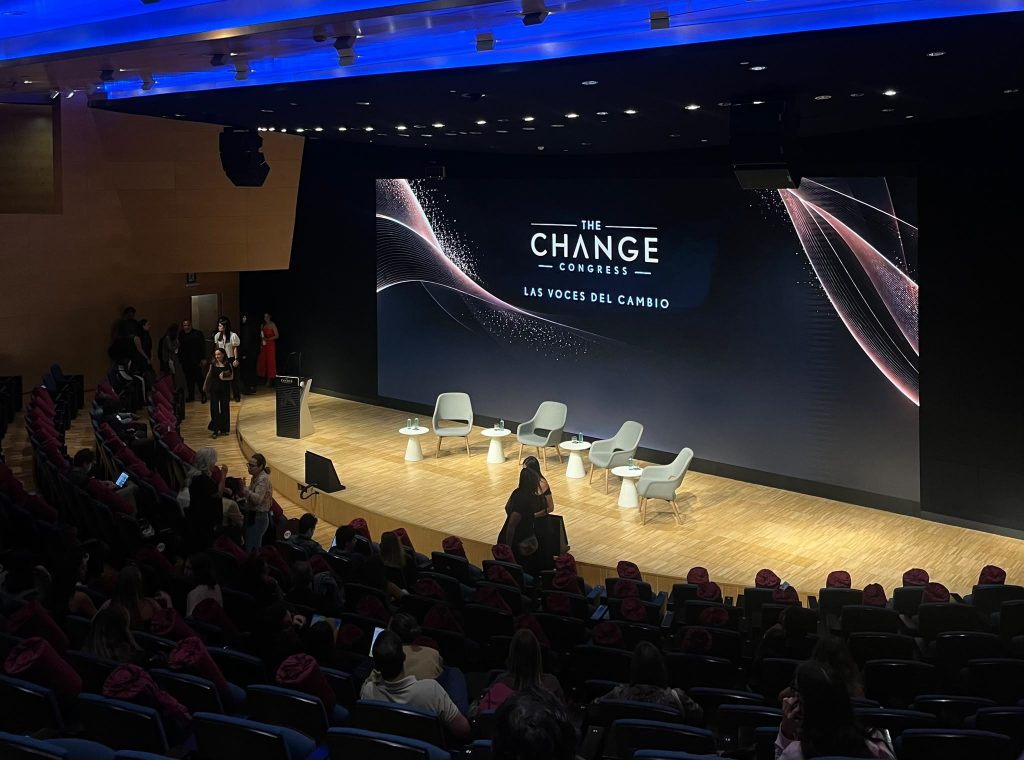
The Change Congress II brought together nearly 300 professionals for a day dedicated to sports as a tool for transformation and addressed issues such as leadership, inclusion, mental health, innovation, and women’s sports. But beyond the program itself, perhaps the most interesting thing for us was seeing how the conversations themselves have evolved.
A few years ago, we probably would have attended a panel discussion focused on explaining why it was necessary to give female athletes more visibility. Yesterday, that call for action was still present—because it’s still needed—but it shared the spotlight with topics such as match revenue, audience growth, broadcast rights, the professionalization of competitions, and brand interest.
“What makes it onto the stage says a lot about what’s changing offstage.”—Beatriz Álvarez, president of Liga F
And that’s where events once again serve as a barometer of society. What makes it onto the stage says a lot about what people are concerned about at that moment, but also about where new opportunities are beginning to emerge.
Women’s sports are attracting larger audiences, more investment, and greater visibility, and brands have already realized that there’s an opportunity here. The next step may be to ensure that this economic growth is accompanied by similar change in boardrooms and decision-making circles because, if one thing became clear at The Change Congress II, it’s that filling stadiums doesn’t mean all barriers have disappeared.
And perhaps the best sign that this change has been fully realized will come on the day when gatherings like this are no longer necessary to remind us that women, too, occupy these spaces.